Gabatrix.net



© CMed (TheUniverseofCMed) 2021
Database and Lore

Denji’Kei, The Desert Outback
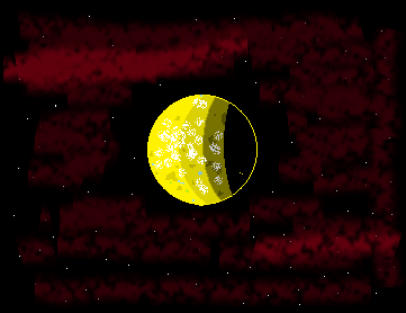
*Spoilers if you haven’t read Gabatrix: The First Peace* “Darling, I promise you that if people like me come from there, you’re probably going to enjoy us more than you thought,” Feri’nita, Yutilian Elite of Denji’Kei. Itrean space is vast. It’s worlds, numerous. While there are at least 130 recorded known worlds colonized by the Itrean clans, this doesn’t include the countless moon colonies and other small outer colonies that thrive in the outer edges of Itrean space. They warrant both their own challenges, big or small, while still offering a road of prosperity for those who wish to live such a life. Denji’Kei is just one example of those countless Itrean worlds. History Planet Denji’Kei was a more recent world colonized in the region known as the Hesik Expanse, an area that rests in the territorial boundaries of the Shal’rein Gok’Shinta subclan and the T’rintar Kingdom of Gui’optre. As with many territorial regions, the established boundary zone is often loosely defined in terminology but strong enough to carry weight in some political tangents. Up to 31 defined Expanse Regions have been colonized to some degree by Itrean societies over the last 100,000 years, not including other areas beyond that period. They often serve as the outer boundary zones of all clan species. The Hesik Expanse is one of the older known regions established during the Era of Old Space, carrying little economic value today. Originally, the Hesik Expanse, like so many areas of space, was always contested and fought over by the different clans. When the Shal’rein explorer Hesik had explored the region, the Kingdom of Gui’optre saw it as an invasive stepping stone by the Shal’rein to begin moving in closer to Gui’ii’Lo’Trelda, the current capital of Gui’optre. In response, the Yutilians had colonized and established the military outpost known as Iyu’Havryu to counter the Shal’rein-occupied world of Kun. By today, Iyu’Havryu is a moderate- performing industrial complex that serves as a lesser version of Gu’ii’Lo’Trelda. Much of the Hesik Expanse is virtually lifeless. Most of its mineral resources were tapped out relatively quickly within 20,000 years. Many of the mining outposts have been long abandoned or discarded and scrapped. As a result, much of the Hesik Expanse remains a quiet backlog region, where there are few battles or conflicts in the area of space. Around 99,000 years ago, a group of Yutilian pilgrims, known as the Wen’Ta’Wen’Ta, decided to lay claim to one of the few worlds capable of sustaining life in the Hesik Expanse. Named Denji’Kei, the desert world is little more than the size of Mars. Its oxygen content is marginal, but enough for humans to breathe, assuming they aren’t running excessively or doing heavy aerobic activity. The Wen’Ta’Wen’Ta’s purpose of settling on the world is almost unknown, but it was speculated that most of the reasons of the pilgrims were to find a world to live under bare essentials. Most religious pilgrimages in Itrean history were typically to avoid the heavily colonized worlds and find a place of sovereignty. Some aspects, such as “The return to nature,” were commonplace under Itrean societies; however, they often warranted their own risks. Over time, many colonized worlds would become crowded, industrialized, and urbanized, often defeating the purpose of the pilgrimage in the first place. Issues in self-sustainability and the threat of invasion by other forces warranted additional risks. Denji’Kai, like the many outlying small colonies of Itrean space, remains vulnerable to attack, where the Itrean clan species will place lesser value in protecting smaller, impoverished worlds. However, by either sheer luck or good calculation, the Wen’Ta’Wen’Ta had proven successful in their choice to colonize Denji’Kai. Most of the desert world is intensely hot, with little to no lakes, with the equator reaching an average daytime temperature of 50 Degrees Celsius. However, closer to the southern and northern polar regions are the coolest areas, reaching a more comfortable 27 degrees Celsius. Most of the Denji’Kai population had spread itself out in the vast southern polar region during the 100,000 years of settlement, often establishing towns and villages near small mountainous areas to help provide protection from Denji’Kai’s annual dust storms. Most of the southern region consists of savannah-like grasses that have long evolved to handle the dust storms that strike the equatorial regions and spread out through the planet. The world itself offers almost no particular value, and the population has to use vaporators to harvest water from the air or mine deep underwater aquifers to get the water they need. Food is mostly harvested from the local Kona’Tey plants, similar to tumbleweeds on former Earth. Besides this, the economic value of Denji’Kai is extremely marginal. Most of the population that lives on Denji’Kai have long accepted their fate that to live on this world is to purposely avoid most technology to the greatest extent possible while still making a daily living in the savannah outback. But, this ultimately has become the planet’s greatest strength. With little value placed on the world and population that barely meets the daily requirements to survive, the other clan species hold little to no desire to conquer it. With Iyu’Havryu present in the Hesik Expanse, even the Shal’rein, such as the local population of Kun that need water to survive, have never wanted this world. As a result, Denji’Kai’s population after Zilik’s Disease has remained around 89.000 in total. The largest settlement, Kai’Wen’Ta, serves as the planet’s only port, where transport ships can land and deliver goods to the world when needed. Kai’Wen’Ta has never been a busy city, but it is enough that it serves as the hub of whatever economic activity the planet has to offer. Denji’Kai has never offered much of a tourist industry, but the few recordings have depicted Denji’Kai’s population as fair and respectable, a people hardened by their nature and environment while considerate to others. Many of the small towns and villages spread out are often described as having buildings similar to those of former Japanese and North American construction, often reminiscent of the Wild West towns of North America in the 1880s on Earth. It is also the planet where Feri’nita, Christopher Darin’s wife and mate, was born. Raised in one of the top three richest families on Denji’Kai, Feri’nita is an Itrean who lavishes in the luxuries of her finances, while also understanding the conditions of the more impoverished around her. With the fear of the Emphra War, the Emphra never bothered with Denji’Kai perhaps either out the reason that the planet offered little in biomass or resources to expand themselves (at least in theory). Despite the outback style of the frontier, Denji’Kai’s only issues have been the same as ever before, enduring the environment, handling the few internal problems from time to time, and relaxing in the bask of the Hesik Expanse….

Denji’Kai as seen from orbit